
Where Aesthetics Meets Strength.
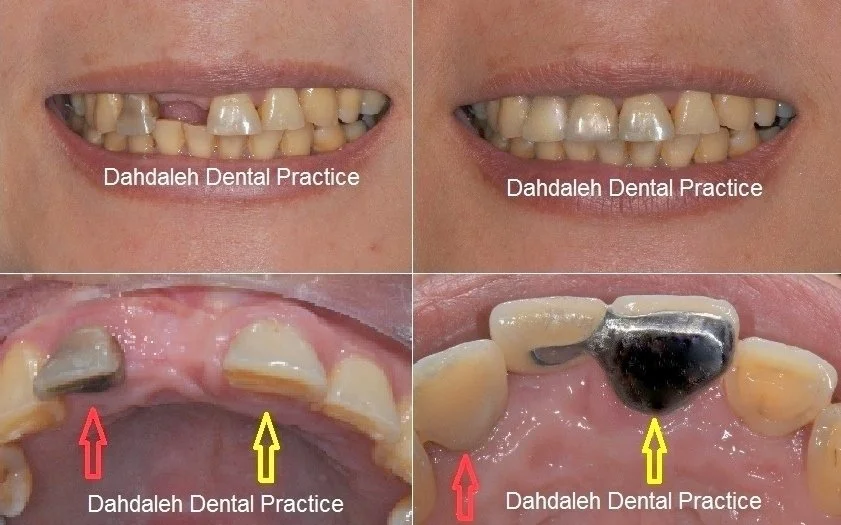
An example of a resin-retained bridge
Designed to blend. Engineered to last.
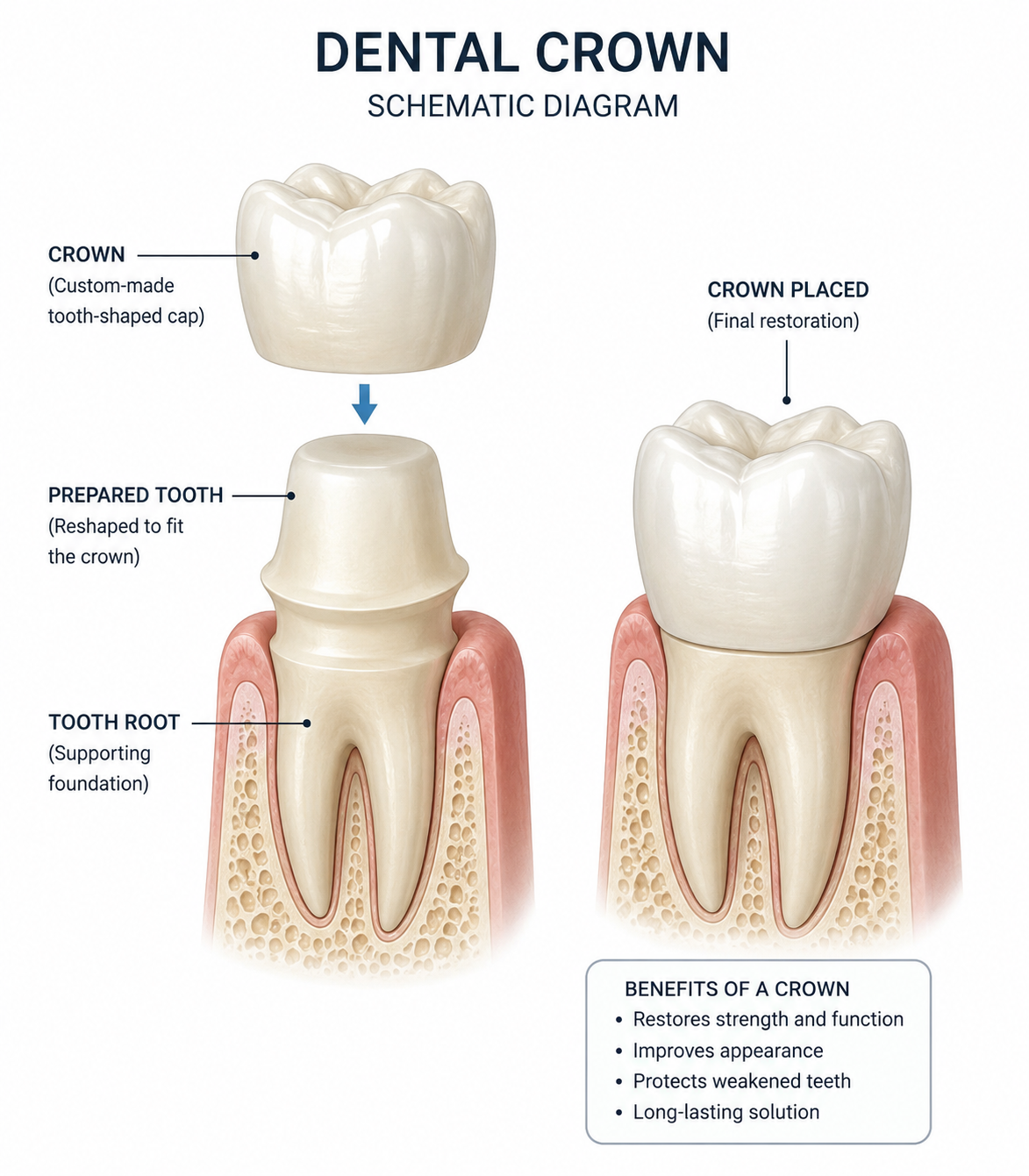
Crowns
A dental crown is a tooth-shaped ‘cap’ that is placed over a tooth or implant to restore its shape, size, and appearance. On natural teeth, crowns are placed to protect the tooth from fracture under biting forces.
Types of crowns:
● Temporary/ Provisional crown
This is provided straight after tooth preparation to protect the tooth untill the final crown is fabricated by the lab.
● Definitive crown
1. Porcelain fused to metal crowns
These crowns are most commonly used for both anterior and posterior teeth as their colour is matched to your adjacent teeth. The underlying metal provides strength to the brittle porcelain material. The porcelain portion rarely can chip or break-off especially under high biting forces. The metal underlying the crown’s porcelain can show through as a dark line at the gum-line if your gum is thin or if your gum recedes.
2. All ceramic crowns
These provide the best natural colour match in comparison to any other crown type and are suitable for people with metal allergies (this is however rare) and high aesthetic demands. The Improved technology of porcelain allows for better fracture resistance. EMAX and Zirconium crowns are used at the practice.
3. Gold crowns
When aesthetics is not an issue, this type of crown can be used when there is very little tooth structure remaining.
4. All resin crowns (indirect resin restorations)
They are aesthetically pleasing crowns that can be mainly used in tooth wear cases. Their advantages include that they require minor tooth preparation and are less expensive than other crown types, however, they can wear down over time. A night guard would be recommended with careful monitoring. If they chip during function, chair-side repair is possible.
5. Implant crowns
They are placed to replace missing teeth over implants. They can be screw or cement retained.
BRIDGES
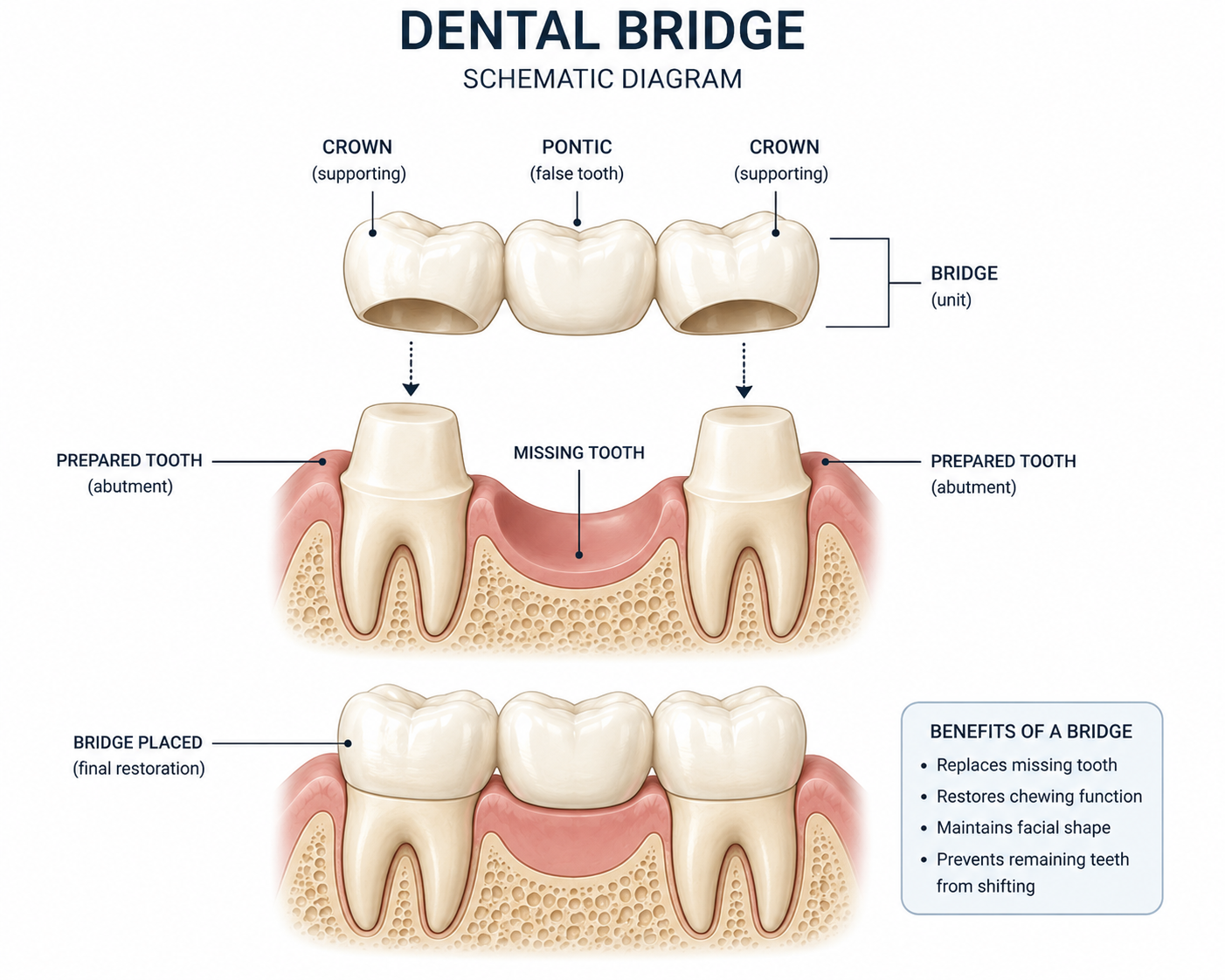
A bridge is a fixed restoration that replaces missing tooth/teeth.
1. Resin retained bridge
These are adhesive bridges that do not require tooth preparation of adjacent teeth.
2. Conventional bridge
This type of bridge requires tooth preparation of the adjacent tooth/teeth to the missing space/s.
3. Implant bridge
This bridge is supported by implants.